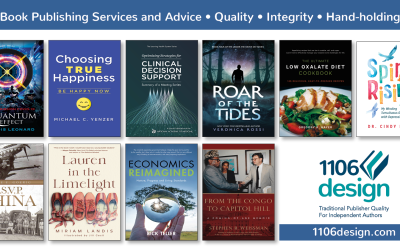
Once upon a time, authors sought out book designers for our creativity and expertise. You would discuss your vision and collaborate with us to create a professional, competitive, print-ready product that turned out more striking than what either of us could have created alone.
Today, with accessible templates and AI tools, it’s tempting to work out what you want on your own before hiring a professional. It’s perfectly fine to try to flesh out ideas and visualize a direction before design begins, but such tools should be used to help start the design discussion, not finalize it.
When you lock into a design upfront and then ask a designer to simply handle “final assembly,” you bypass the strategic discovery phase that helps turn initial cover and interior design ideas into a competitive retail product. You may be getting what you want initially, but that doesn’t mean it’s the right solution for your specific book.
As publishing professionals, our job isn’t to mindlessly do as we’re told—it’s to ensure your book prints well, has a lasting market impact, and to offer guidance to help that happen.
Why Pre-Designing Can Hurt Your Book
When authors dictate the design too early, here are just a few of the major problems that typically follow:
- Missing Genre Cues: Readers judge books in seconds using visual cues. If your cover ignores established typography and imagery conventions for your specific genre (as most DIY mockups do), your target audience will scroll right past it. While it’s important that you’re happy with your cover, you should design with your audience in mind if you are trying to make a profit (this goes for the interior, too).
- Overly Complex Covers: Because you know every detail of your book, it’s easy to design an overly literal, cluttered cover. A book cover shouldn’t illustrate the entire story—it’s a marketing tool meant to hint at your book’s themes, trigger curiosity, and signal quality, even when reduced to thumbnail size.
- Costly Production Headaches: DIY mockups rarely account for spine calculations, bleed margins, or print-ready color profiles. If you can’t provide the layered files and licensed fonts for your chosen design, we would need to rebuild your concept from scratch (potentially sacrificing elements from your chosen design) or use the subpar files as they are (and hope the printer accepts them). Additionally, for AI users, AI art often lacks the resolution required for print and carries ongoing copyright risks.
- Mismatched Cover and Interior Designs: Your cover and interior should work together seamlessly. Without design training, it’s easy to choose exterior and interior typography, colors, and visual motifs that clash with one another.
- Interior Layout Glitches: Trying to format your book in Word to reflect the exact desired interior layout you want is not only visually unappealing for a book (Word is not design software), but it can introduce file issues when it’s finally flowed into professional design software like InDesign. Furthermore, Word manuscripts behave differently across various devices—what looks neatly aligned on your screen can fall apart the moment it’s opened on a different computer.
How to Collaborate With Your Book Design Team
When you hire a book designer, you’re investing in market research, design expertise, and extensive software training—not just renting a pair of hands. Instead of arriving with a finished mockup, bring your design team the raw ingredients needed for success:
- Comparable Titles: Share three to five bestselling books in your genre whose covers and interiors resonate with you. Consider what draws you to their typography, colors, and imagery. If you still want to share a rough mockup for ideation, treat it as a way to spark inspiration and discussion rather than a rigid blueprint.
- Tone and Audience: Describe your book’s emotional hook, core themes, goals, and target readers (including demographics like age, gender, or background).
- Project Specs: Provide your title, subtitle, trim size (your designer can advise if you are unsure), formats (such as hardcover, paperback, or eBook), desired print and distribution channels, back-cover copy, and jacket flap text (if you plan to have a jacketed hardcover). For interior design, you will also need your finalized manuscript (see our previous article for tips on preparing your manuscript).
- Layered Art Files (If Applicable): If your book requires custom illustrations—such as if it’s a children’s picture book—get technical specs from your design team before your illustrator begins work. This can help your illustrator create the art properly from the start to avoid costly revisions. When the illustrations are done, send the layered files to your design team.
You can trust 1106 Design to work closely with you to translate your vision into a cohesive, market-ready package. When you allow us to be your compass, you give your book its best shot at standing out on the shelf. Contact us today to learn more about our process and how we can help elevate your book.